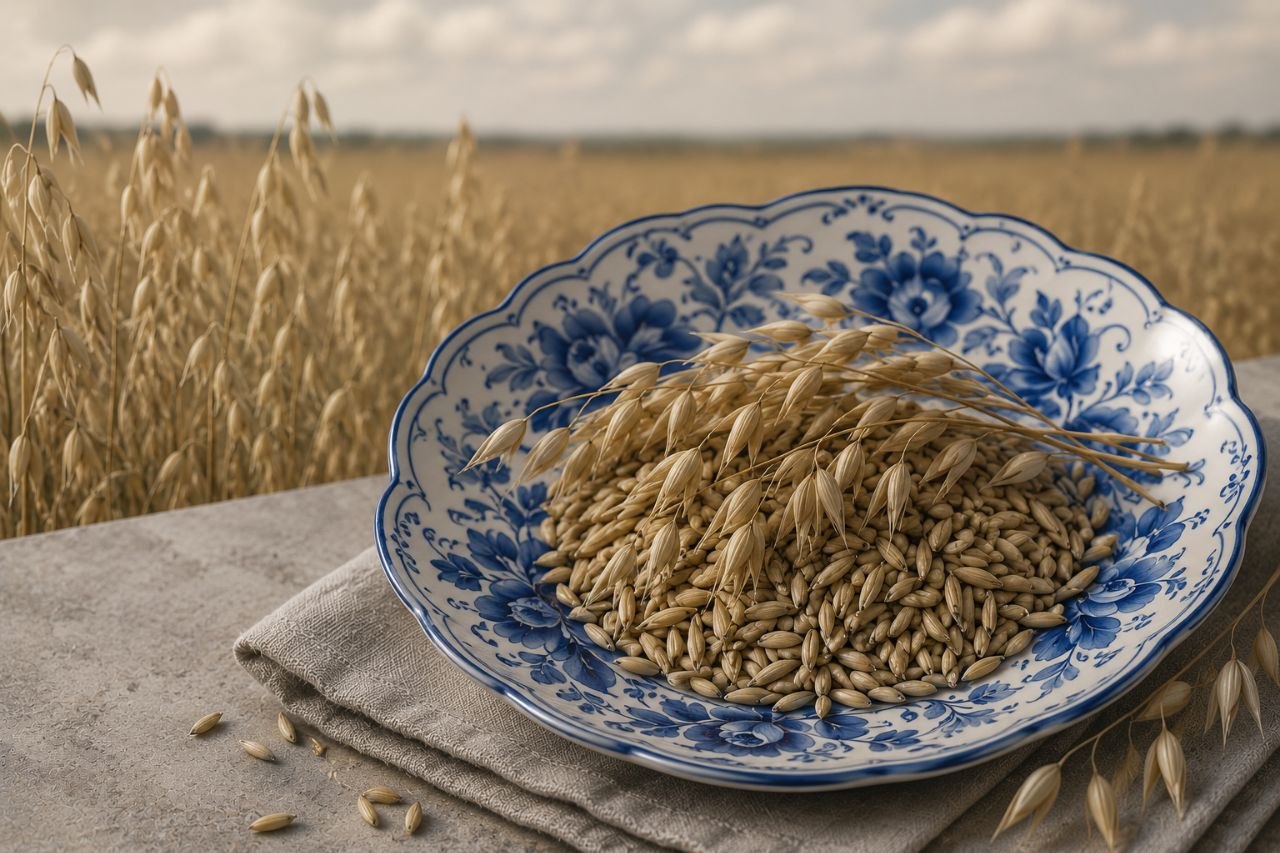
Russian oats are steadily gaining momentum on the international market. In 2025, Russia exported more than 280,000 tons of oats worth around $62 million — a new record for the country’s agricultural exports.
The Global Oat Market: Size and Key Trends
Global oat trade is going through an interesting period. Worldwide oat production is gradually declining, as many countries are reducing oat acreage in favor of other grains. At the same time, international trade volumes are growing.
The reason lies in the changing structure of demand. The feed segment, traditionally used for animal nutrition, is losing ground, while the food segment is becoming increasingly popular. Healthy eating, functional foods, and plant-based milk alternatives are all driving stronger demand for high-quality oats.
Traditional market leaders — Canada, Australia, Finland, and Sweden — continue to supply oats to the global market. However, the geography of trade is changing: Lithuania, Estonia, Poland, and the United Kingdom have become more active. Between 2018 and 2025, Russia increased its oat exports in physical terms almost fivefold.
The main driver of growth is Asia. China, which barely imported oats 20 years ago, now purchases around half a million tons annually. Mongolia is increasing its volumes. Turkey consistently ranks among the top three importers. The UAE, Central Asian countries, and South Korea are also joining the list of active buyers.
Competitive Advantages of Russian Oats
Russian oats have several strengths that make them competitive on the international market.
The Siberian Federal District accounts for one third of Russia’s total oat harvest. Altai Krai, Krasnoyarsk Krai, Novosibirsk, Omsk, and Tyumen regions are areas with unique climatic conditions: cold winters harden the soil, while short summers force plants to accumulate maximum nutrients. In 2025, Altai Krai alone harvested 538,600 tons — more than many countries produce.
Logistics is another advantage. The main production areas are located close to Asian markets. The route from Siberia to China is relatively short, which reduces transportation costs and delivery times.
Grain quality is also strong. Russian varieties are known for good germination, high protein content, and high levels of beta-glucans. Siberian climatic conditions contribute to the formation of dense, large grains with minimal impurities.
Pricing is competitive as well. Producers offer attractive terms, especially for large-volume shipments.
Varietal diversity is also important. Russian breeders develop oat varieties for different climate zones and processing needs. There are varieties suitable for instant oat flakes, oat flour, and high-protein products for sports nutrition.
Oat Processing Products and Areas of Application
The modern food industry has learned to extract maximum value from oats, creating a wide range of products for different market segments.
Groats and flakes are the classic category. Whole oat groats retain all vitamins and minerals but require long cooking times — around 40–60 minutes. That is why producers have developed alternatives: flakes with different degrees of processing. “Hercules” oats cook in 15–20 minutes, “Extra” oats take only about 5 minutes, and some products can simply be prepared with boiling water.
Oat flour occupies a separate niche. The finished product yield is around 72% of the raw material. It is used in bakery and confectionery production, including cookies, pancakes, crispbreads, and muffins. During processing, bran is also produced — about 19% of the raw material — which is rich in fiber and used in dietary nutrition.
Tolokno is an ancient product that is gradually returning to the market. The grain is soaked, steamed for 1.5–2 hours, dried, and ground. The result is a flour with a special structure that is easy to digest and does not require cooking.
However, oats are not used only for human food. The feed segment remains important as a source of high-quality nutrition for horses, cattle, and poultry.
What about plant-based milk? This is one of the key trends of recent years. Production of oat-based drinks is growing at double-digit rates.
Kissels, instant porridges, muesli, snack bars, and even cosmetic products — the list continues. International partners value Russian oats precisely because of their versatility.
Production Geography: Siberia as Russia’s Oat Granary
When speaking about oats in Russia, it is impossible not to mention Siberia — the region that has become the country’s main supplier. The Siberian Federal District accounts for 32.3% of Russia’s total oat harvest.
Altai Krai holds the leading position. In 2025, the region harvested 538,600 tons — the highest figure among all Russian regions. Altai’s grain fields are considered the largest in the country.
Krasnoyarsk Krai is the second-largest producer. Its 2025 output of 352,100 tons speaks for itself.
Novosibirsk Region with 242,300 tons, Tyumen Region with 199,200 tons, and the Republic of Bashkortostan with 179,700 tons complete the top five. Each region has its own strengths: Novosibirsk focuses on technological efficiency, Tyumen delivers stable results through well-planned crop zoning, while Bashkortostan combines oat cultivation with a developed livestock sector.
Siberia’s climate is harsh, but it has clear advantages. Cold winters eliminate many pests and pathogens. A short but intense summer forces plants to build biomass quickly. The result is high-quality grain with strong protein and fiber indicators.
Omsk, Kemerovo, and Irkutsk regions, the Republic of Tatarstan, and Samara Region are also among the top ten producers. This wide geography allows Russia to diversify supply and reduce the risks of crop failure.
For international buyers, this means stability. Russia has a distributed production system, where each region specializes in its own varieties and technologies. Such a structure helps ensure uninterrupted oat supplies even in challenging years.
China: A Strategic Market for Russian Oats
China has become the main importer of Russian oats, and this trend is only strengthening. In 2025, China purchased more than $56 million worth of oats — the lion’s share of Russia’s total oat exports, which amounted to almost $62 million.
Over the past 20 years, oat consumption in China has almost tripled — from 350,000 tons to 950,000 tons annually. The middle class is expanding, and consumers are paying more attention to healthy eating. Oatmeal, muesli, snack bars, and oat drinks are moving from the category of exotic products into everyday diets.
Processors are actively increasing production. New plants for instant oat flakes are opening, and the range of functional foods is expanding. Domestic production does not cover growing demand, making imports a necessity.
Russia is in a favorable position here. The logistical advantage is obvious: the delivery route from Siberia to processing facilities in China is relatively short. Competitors such as Australia and Canada are much farther away.
However, the Asian market is not limited to China. Mongolia and Turkey are also among the top three importers. Mongolia traditionally buys oats for livestock and food processing, while Turkey uses oats for feed production and partly for processing into groats.
The list of buyers has changed compared with 2021. The UAE is now in fourth place, as the country actively develops grain processing and re-exports finished products. Georgia and South Korea remain in fifth and sixth place respectively.
Kazakhstan has moved up from eighth to seventh position. Serbia and Azerbaijan are new destinations among Russia’s partners, and their appearance on the list indicates expanding export geography. Kyrgyzstan rounds out the top ten.
For suppliers, this means risk diversification. Dependence on a single market is always dangerous, but when there are ten active destinations across different regions, the situation becomes more predictable.
Investment Opportunities and Terms of Cooperation
In 2025, Russia exported oats worth almost $62 million, exceeding the previous year’s record of $59.3 million. In physical terms, exports amounted to more than 280,000 tons, although the 2024 figure was higher at 309,000 tons. The increase in value despite a slight decline in volume means one thing: prices are rising, and the market is ready to pay more for quality grain.
The federal center Agroexport notes that between 2018 and 2025, export volumes increased 4.8 times. Such dynamics are rare in the grain sector. This is a sustainable trend driven by real demand growth.
What does this mean for potential investors?
Stability. In 2025, production reached 3.8 million tons, up 25.8% from the previous year. Yields increased from 19 to 22.7 centners per hectare. This reflects improved agricultural technologies and the introduction of new varieties.
Competitive pricing. Producers offer attractive conditions for large wholesale buyers. Logistics costs are lower than those of overseas competitors.
Opportunities for processors. Oats are not only a raw material for resale, but also a foundation for developing in-house production of flakes, flour, and plant-based drinks.
There are risks, of course. Weather conditions can affect harvests, while currency fluctuations can influence final costs. However, the diversification of production regions helps minimize these factors.
For those considering long-term cooperation, Russian oats represent a reliable asset. Demand is growing, supply is stable, and prices remain reasonable.
Prospects for Russian Oat Exports
Where is the market heading?
According to forecasts, oat consumption in China may reach 1.2–1.5 million tons by 2030. Russia, as the nearest major supplier, has every chance to increase its share. If Russian oats currently cover around 15–20% of China’s imports, this figure could double within several years.
The emergence of new markets is also noteworthy. The UAE, Serbia, and Azerbaijan began purchasing Russian oats relatively recently, but their volumes are already measured in thousands of tons. Export geography is likely to continue expanding. The Middle East, North Africa, and Southeast Asia are potential growth destinations.
Changes are also taking place inside Russia. Yields are rising — from 19 to 22.7 centners per hectare in just one year. This is the result of breeding, improved agricultural technologies, and precision farming. Further yield growth will allow Russia to increase output without significantly expanding planted areas.
Qualitative changes are also possible. Global demand is rising for organic grain, non-GMO products, and goods with confirmed traceability. Russian producers can occupy this niche and receive a price premium.
However, there are also limiting factors. Logistics remains a bottleneck: the capacity of transport corridors is limited, especially toward Asia. Currency settlements have become more complicated. Competition from traditional suppliers has not disappeared.
Nevertheless, the overall direction is clear. Russia is becoming one of the key players in the global oat market, with exports growing almost fivefold over seven years.
For international buyers, this means the emergence of a reliable partner at a reasonable price. For Russian producers, it means new opportunities to scale their businesses. For the overall market, it means healthier competition.
Thus, Russian oats are confidently occupying their niche in the global market. The numbers speak for themselves: volumes are growing, geography is expanding, and quality is being recognized by international partners. Siberia’s grain belt proves that it can not only feed the domestic market, but also compete successfully on the global stage.
For those seeking reliable suppliers or planning to invest in oat processing, the market offers attractive opportunities: stable production, competitive prices, and developing infrastructure.
Where to Buy Russian Oats Wholesale?
To purchase Russian oats wholesale, contact the G2R platform and submit a request through the relevant product category card. A platform manager will contact you shortly to clarify the details.
After that, the G2R team will select a Russian supplier according to your requirements and help organize the delivery. You will only need to receive the goods in your city.
Please note that the platform itself is not the seller of the product. It acts only as an assistant in finding suppliers in Russia and organizing the supply process.